

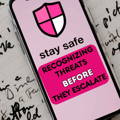
“Situational awareness is your first line of defense. Avoiding a threat before it happens."
Personal Safety Awareness: How To Recognize Threats Before They Escalate
Personal safety awareness is not about living in fear or assuming danger is everywhere. It is about learning to recognize risk early, understanding how threats develop, and making smart decisions before a situation becomes unsafe.
Looking at the whole spectrum, most dangerous encounters do not begin with sudden violence. They unfold through subtle behaviors, environmental cues, and overlooked warning signs that are then acted upon.
Developing strong personal safety awareness means training yourself to observe patterns, trust legitimate warning signals, and stay mentally present in your environment. This skill does not require paranoia. It requires attention, practice, and the confidence to act when something feels wrong.

The Key Elements of Situational Safety Awareness
Personal safety awareness is the ability to recognize potential danger before it becomes a problem. It includes understanding your surroundings, noticing behavioral anomalies, identifying risk factors, and responding proactively rather than reactively.
When these three elements work together, you gain more time, more options, and more control over outcomes. At its core, awareness involves three key areas of focus:
• Environmental awareness – understanding what is happening around you
• Behavioral awareness – recognizing suspicious or concerning actions
• Self-awareness – recognizing your own distractions, habits, and vulnerabilities
Identifying Pre-Incident Behaviors
Most people imagine danger as sudden and unpredictable, but in reality, threats usually follow a pattern. Individuals with harmful intent often engage in pre-incident behaviors before acting. Learning to recognize these early-stage behaviors allows you to disengage, create distance, or seek safer surroundings before a situation escalates. These behaviors can include:
• Observing potential targets
• Testing boundaries through conversation or proximity
• Positioning themselves near exits or isolated areas
• Looking for distracted or unaware individuals
Specifically, in regards to dating, there's a whole list of personality cues you can pick up on during a date that could signal your date is dangerous. Read the Defense Divas article ’10 Signs He May Be Dangerous’ to learn about these subtle observations that reveal a lot about someone’s character, temperament and possible ill intentions.

Understanding Baseline Behavior
Every environment has a “normal” rhythm. In a grocery store, people shop. In a parking lot, people load groceries and leave. In an office, people move with purpose. Behavior that feels out of place deserves attention, even if you cannot immediately explain why.
Personal safety awareness involves noticing when someone’s behavior does not match the expected baseline. Examples include:
• Someone lingering without a clear purpose
• Someone repeatedly watching others instead of focusing on their own tasks
• A person who seems overly interested in your movement or belongings
• Individuals positioning themselves in areas where people are isolated or distracted
How To Recognize Personal Boundary Testing
Many threatening situations begin with boundary testing. This occurs when someone attempts small actions to see how you respond. These actions may seem minor, but they are often deliberate. Examples include:
• Standing too close
• Asking personal or invasive questions
• Ignoring polite signals to disengage
• Making comments designed to gauge confidence or compliance
Responding with clear, confident boundaries often discourages further escalation. As mentioned in the Defense Divas article ‘Victim Selection Through the Eyes of a Rapist’, most predators pursuing a random victim will look for an easier target if they feel you are going to be difficult to overpower. You do not owe politeness when your safety feels uncertain.

“Do something consistently for 30 days, and it becomes a habit.”
The Role of Distraction in Personal Risk
Personal safety awareness also involves managing distractions. Distraction is one of the most common factors that makes you an easy target for predators. Phones, headphones, fatigue, stress, and mental preoccupation all reduce your ability to notice warning signs.
High-risk moments often occur in transitional spaces, such as:
• Parking lots and garages
• Crossing campus alone or at night
• Entryways and exits
• Public transportation areas
• Stairwells and elevators
• Parks and recreational areas
Get in the habit of having your self-defense weapon in your hand and visible while traversing the higher risk activities of your day-to-day life. Walk with your head high, eyes scanning those around you and a purpose to your stride. Situational awareness is ALWAYS your first line of defense.
Learning To Trust Your Instincts
That uneasy feeling that something is “off” is not irrational fear. It is often the brain processing subtle inconsistencies faster than conscious reasoning can explain. Unfortunately, we are trained from a young age to dismiss this because if we’re wrong, we may be accused of judging someone or creating an issue where one didn’t exist. The fact is you might even have to retrain yourself to listen to your intuition.
Intuition is built on:
• Pattern recognition
• Past experiences
• Subconscious threat detection
When people ignore early discomfort, it is often because they fear appearing rude, dramatic, or mistaken. Learning to trust appropriate intuition is a key component of personal safety awareness.

Predictability and Personal Risk
Routine can create comfort and productivity in our daily lives. However, they can also increase vulnerability. When habits become predictable, it becomes easier for someone to anticipate your behavior.
Examples of predictable patterns include:
• Leaving at the same time every day
• Parking in the same spot consistently
• Wearing headphones while walking alone
• Taking the same routes without variation
Small adjustments, such as changing routines, staying alert in transitional areas, and varying habits will reduce risk without disrupting your daily life. Take a different run than you usually do. Get the mail at a different time. Keep your routines, non-routine in order to avoid a premeditated assault.
Achieving Awareness Without Anxiety
Effective personal safety awareness does not mean living in constant alertness. It means developing a calm, confident, and observant mindset. With practice, awareness becomes second nature rather than a source of stress.
Healthy awareness feels like:
• Noticing without panicking
• Observing without assuming
• Being proactive instead of reactive

Practical Ways To Strengthen Your Personal Safety and Situational Awareness Skills
Improving awareness does not require drastic lifestyle changes. Simple habits can increase safety significantly:
• Take brief moments to scan your surroundings when entering or leaving spaces.
• Be aware of what’s going on around you when on your phone and hang up when it’s appropriate.
• Maintain confident posture and assertive movement.
• Practice verbal assertiveness to be ready to stand up for yourself.
• Reflect on moments when something felt off and learn from them to get your intuition tuned up.
Situational awareness begins with presence. Being aware means actively observing your surroundings rather than moving through them on autopilot. This includes noticing who is around you, how people are behaving, and what feels out of place. Awareness does not require constant vigilance or anxiety- it requires attention. These small actions build confidence, reinforce instinct, and improve real-world readiness.

Early Actions Matters More Than Reaction
The earlier you recognize risk, the more choices you have. Once a situation escalates, options narrow quickly. Awareness gives you time to change direction, leave, seek help, or set boundaries.
Personal safety and situational awareness are not about waiting until danger becomes obvious. That’s when it transitions to self-defense. It is about recognizing patterns early and acting while you still have control to prevent the need to defend yourself physically.
The Takeaway
Personal safety awareness is one of the most powerful tools available because it does not rely on physical strength, special equipment, or confrontation. It relies on observation, confidence, and informed decision-making.
By learning to recognize early warning signs, respect intuition, and stay mentally present in your environment, you can reduce risk without sacrificing independence or peace of mind. Awareness empowers you to stay ahead of problems- when solutions are easier, safer, and more effective.
Defense Divas® wants you to be equipped to defend yourself not only with a self-defense weapon, but also with the practical knowledge of safety awareness and prevention.
Follow us on your favorite social media platforms (@DefenseDivas) to receive safety tips, product videos and more in your daily feed. Leave us a comment and introduce yourself too!
Copyright©2026 All rights reserved. This article or any portion thereof may not be reproduced or used in any manner whatsoever without the express written permission of Defense Divas®.