

“Taking a few simple precautions can ensure your college life safety. ”
5 Must-Do College Safety Preps Every Student Should Review
Heading off to college is one of life's most exciting milestones. New friends, new experiences, and newfound independence are all part of the adventure. Whether you're moving into a dorm, joining a sorority, or sharing an off-campus apartment, personal safety should be just as important as choosing your classes and decorating your new living space.
College life introduces new environments, unfamiliar people, and greater personal responsibility. Developing smart safety habits before the semester begins can help you navigate these experiences with confidence.
These five essential college safety tips will help you prepare for common campus security concerns without sacrificing the excitement and independence of college life.
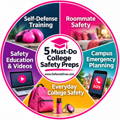
⭐Enroll in a Free Self-Defense Class
One of the most valuable things you can do for your personal safety is learn how to recognize threatening situations, establish boundaries, and physically defend yourself when necessary. A quality self-defense class teaches much more than punching and kicking. It develops situational awareness, assertive communication, escape techniques, and the ability to make decisions under pressure.
Even if you've taken a self-defense course before, refreshing your skills is worthwhile. Physical techniques become less familiar without practice, and repeated training can help you respond more effectively in an emergency. Look for programs that include realistic scenarios, verbal de-escalation, escape from common grabs, and strategies for getting to safety.
Many campuses and community organizations offer free or low-cost self-defense training. A particularly useful approach is to enroll with your roommates, friends, or sorority sisters. Learning together gives you an opportunity to discuss safety concerns, practice techniques, and encourage one another to maintain good personal safety habits.

⭐Do a Background Check on Any New Roommates
Sharing a living space with someone you barely know is a common part of college life. Whether you're assigned a roommate through university housing or searching for someone to split the rent on an apartment, it's important to understand who will have access to your home, personal belongings, and daily routines.
Campus residential security deserves serious consideration. According to the National Center for Education Statistics, approximately 6,500 burglaries were reported on college campuses in 2021, making burglary one of the more frequently reported categories of campus crime. Although these incidents occurred across various campus locations, the statistics underscore the importance of securing living spaces and personal belongings.
Before moving in with someone unfamiliar, take time to verify their identity and discuss living expectations. If you're arranging off-campus housing independently, always check publicly available information. Use a reputable background screening service with the person's knowledge and consent.
Background checks can sometimes reveal relevant public criminal or court records, but they are not comprehensive safety evaluations. Information may be outdated, incomplete, or associated with the wrong person. A clear background check does not guarantee someone is trustworthy, and screening services do not generally provide access to confidential medical records or private drug-testing results.

For students assigned roommates by their university, begin by reviewing the school's housing policies and roommate reassignment procedures rather than assuming an outside screening service is necessary.
Establish clear roommate boundaries before problems develop. Discuss expectations regarding overnight guests, alcohol, parties, shared belongings, personal privacy, and locking exterior doors. Everyone sharing the residence should agree about who may receive spare keys, whether guests can enter when their host is absent, and how to address uncomfortable situations.
The physical security of your living space matters just as much as roommate compatibility. Never prop open secured residence hall entrances, and avoid allowing unknown individuals to follow you through access-controlled doors. Keep windows and exterior doors locked, report malfunctioning locks, and request maintenance promptly when security equipment isn't working.

⭐Prepare Now for an Active Shooter Crisis on Your Campus
Start by familiarizing yourself with the emergency procedures established by your university. Identify exits in your classrooms, library, residence hall, and frequently visited campus buildings. Whenever possible, locate two potential exits and identify areas where you could shelter if leaving becomes impossible.
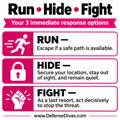
Federal emergency preparedness guidance emphasizes three basic responses to an active shooter emergency: RUN, HIDE, FIGHT. These actions are not necessarily performed in sequence. Your response should depend on the immediate circumstances and whether you can safely escape.
• RUN: If a safe escape route is available, leave the area immediately. Do not delay to collect belongings. Move away from the danger and call 911 once you're safe.
• HIDE: If escaping isn't possible, find a location out of the attacker's view. Lock and barricade doors when possible, silence your phone, and remain quiet until authorities confirm it is safe to leave.
• FIGHT: If you are in immediate danger and cannot escape or hide, physical resistance may be necessary as a last resort to stop the attacker.
Review your school's lockdown procedures and emergency notification system. Campus alerts may contain instructions to evacuate, shelter in place, or avoid particular buildings. Following official instructions is more reliable than acting on unverified information circulating through social media.
Students should also create a personal emergency communication plan. Designate a trusted emergency contact, maintain updated contact information, and discuss how you'll communicate after reaching safety. Avoid making a predetermined meeting location your first priority during an active emergency; immediate safety and official evacuation instructions come first.
Keep your phone charged throughout the day and consider carrying a portable charger. Learn how to activate your phone's emergency SOS feature and ensure campus emergency notifications are enabled. These simple preparations can make it easier to contact emergency services or communicate with loved ones during a crisis.
Some students also choose to carry bulletproof protection as an additional precaution. If considering ballistic-resistant backpack inserts or similar equipment, understand the product's tested protection level, coverage limitations, and appropriate use.
For a more detailed explanation of active shooter response strategies, read the Defense Divas® article How to Survive an Active Shooter Crisis. Reviewing this information with your roommates, friends, or sorority sisters can help everyone become familiar with appropriate emergency responses.

⭐Check Out These 30 College Safety Tips Today
College safety extends well beyond dorm rooms and classrooms. Students regularly encounter unfamiliar situations while attending parties, walking across campus after dark, using rideshare services, dating, and exploring surrounding communities.
Understanding the types of crimes affecting college communities is an important first step toward developing stronger personal safety habits. According to the National Center for Education Statistics, approximately 23,400 criminal incidents were reported on U.S. college campuses in 2021, including 10,400 forcible sex offenses, 6,500 burglaries, and 3,500 motor vehicle thefts.
Sexual assault is an especially serious concern. A 2024 survey involving 10 universities found that 18.9% of undergraduate women reported experiencing nonconsensual sexual contact involving physical force or inability to consent since enrolling. These findings demonstrate why education about consent, dating safety, and access to support services remains essential.
Defense Divas® created a practical collection of 30 quick tips for staying safe at college covering everyday personal safety situations. These recommendations are worth reviewing before the semester begins and periodically throughout the school year.
Several fundamental habits deserve particular attention.
• Practice situational awareness. Choose well-lit walking routes, avoid isolated shortcuts, and remain attentive to people and activity around you. Keep your phone accessible without becoming so absorbed in it that you stop noticing your environment. If someone is following you or making you uncomfortable, move toward an occupied public location and request assistance.
• Get equipped with self-defense tools. Many students choose to carry personal safety equipment designed for campus life, including personal alarms and other defensive tools. Before purchasing pepper spray, a stun gun, or any other self-defense device, verify applicable state laws and your university's rules. Some campuses prohibit weapons or defensive sprays even when those products are legal elsewhere in the state.
• Make smart decisions about parties and alcohol. Arrange transportation before going out, stay with trusted friends when possible, and avoid accepting drinks from unfamiliar people. Keep track of your beverage and never consume something you suspect has been tampered with. If a friend becomes unexpectedly disoriented, severely impaired, or unconscious, seek emergency medical assistance immediately.

• Trust your instincts and establish boundaries. You do not owe strangers access to your time, personal information, or living space. If an interaction feels threatening or someone refuses to respect your boundaries, remove yourself when possible and contact someone who can help.
• Know your campus crime statistics and reporting options. Under the federal Clery Act, colleges participating in federal student financial aid programs must publish an Annual Security Report containing three years of reported campus crime statistics and information about security policies. Reviewing this report can help you understand the safety concerns affecting your specific campus. Remember that reported crimes do not represent every incident that occurs, particularly in cases involving sexual violence or stalking.
• Protect your personal belongings and digital information. Keep dorm keys, student identification, and access cards secure. Use diversion safes. Avoid posting your exact location or daily routine publicly on social media, and review the privacy settings of apps that share your location. Use unique passwords and multifactor authentication for important accounts, particularly school email, banking, and student portals.
• Familiarize yourself with available support services. Locate your university's Title IX office and learn about options for reporting sexual harassment, sexual assault, dating violence, and stalking. Knowing where to access confidential counseling, victim advocacy, and medical assistance is just as important as knowing where campus police are located. The National Sexual Assault Hotline also provides confidential support at 800-656-HOPE (4673) and online through RAINN.
The goal of these precautions isn't to make students suspicious of everyone they meet. It's to help them make informed decisions, recognize situations where additional awareness is appropriate, and know where to turn when they need assistance.

⭐Watch Defense Divas® Playlist of College Safety Videos
Visual demonstrations can make personal safety information easier to understand and remember, particularly when learning basic defensive movements or reviewing scenarios you might encounter around campus.
The Defense Divas® YouTube channel includes a collection of college safety videos covering topics related to personal protection, drinking and dating safety, situational awareness, and campus security.
Consider organizing a college safety discussion night with your roommates, sorority sisters, or friends. Review educational videos together, identify areas where everyone feels less confident, and discuss practical ways to look out for one another during everyday campus activities.
These conversations can also help establish a shared understanding of what to do when someone needs assistance. Supporting a friend who feels uncomfortable, helping arrange safe transportation, or recognizing signs that someone needs medical attention are valuable parts of building a safer college community.
It’s worth noting, videos are an excellent introduction to safety concepts, but they should supplement rather than replace hands-on instruction. Watching someone demonstrate a self-defense technique is different from practicing that movement under the supervision of a qualified instructor.
“Locate two exits and places to hide in each of your classrooms in case an active shooter enters.”

⭐Bonus: Attend College Orientation
⭐Make Personal Safety Part of Your College Experience
At Defense Divas ®, we offer a diva-fantastic selection of self-defense products for women, including Bulletproof Clothing, Backpacks & Accessories, Pepper Sprays, TASER® weapons, Stun Guns, Concealed Carry Purses, and more. Protect yourself today from an active shooter at work or school with our full line of bulletproof products. Learn more about women’s empowerment, self-defense and female personal safety at Defense Divas®
Copyright©2026 All rights reserved. This article or any portion thereof may not be reproduced or used in any manner whatsoever without the express written permission of Defense Divas®.