
“Keep shrubs below windows trimmed.”
13 Simple Steps to Burglar-Proof Your Home
Your home should be the place where you and your family feel safest. Unfortunately, burglars often look for easy opportunities rather than expensive homes. A house with visible vulnerabilities is far more attractive than one that appears secure, occupied, and difficult to enter.
The good news is that most residential burglaries are preventable. Criminals typically want to get in quickly, avoid being seen, and leave before anyone notices. Even small improvements to your home's security can convince a burglar to move on and look for an easier target.
Whether you own your home or rent an apartment, taking a layered approach to home security can significantly reduce your risk. Physical barriers, good lighting, smart technology, and everyday habits all work together to make your home a much less appealing target.
Here are 13 practical ways to burglar-proof your home and increase your family's safety.
1. Make Your Home Look Occupied
One of the first things burglars look for is a home that appears empty.
An overflowing mailbox, packages sitting on the porch, newspapers piling up, or several nights of complete darkness can all suggest that no one is home. Criminals often spend time observing a property before attempting a break-in, looking for patterns that indicate when a house is vacant.
Fortunately, making your home appear occupied is easier than ever.
Consider:
• Using programmable smart lights that turn on automatically.
• Leaving a vehicle in the driveway when possible.
• Asking a trusted neighbor to collect packages while you're away.
• Having someone mow your lawn or maintain your landscaping during vacations.
• Using smart plugs to randomly turn lamps or televisions on and off.
These simple habits create uncertainty, and uncertainty is one of the biggest deterrents to opportunistic criminals.

2. Strengthen Your Doors Before Upgrading Anything Else
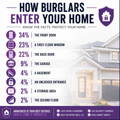
Many homeowners invest in cameras or alarm systems while overlooking the weakest part of the house: the front door.
In many homes, the door itself is strong enough, but the hardware securing it is not. Standard builder-grade strike plates are often attached with short screws that penetrate only the door frame trim. Under force, they can fail surprisingly quickly.
One of the most cost-effective home security upgrades is replacing those short screws with 3-inch hardened screws that anchor deep into the wall framing. Reinforced strike plates, heavy-duty deadbolts, and solid-core exterior doors all make forced entry significantly more difficult.
Don't forget secondary entry points such as:
• Back doors
• Garage entry doors
• Patio doors
• Basement entrances
A burglar looking for a quick entry is much less likely to continue if every door presents a challenge.

3. Lock Your Windows—Even When You're Home
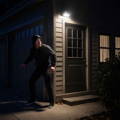
Windows remain one of the most commonly overlooked entry points.
Many people crack a window for fresh air, leave basement windows unlocked, or assume second-story windows are inaccessible. Burglars know better.
Every accessible window should have a functioning lock. Sliding windows can be reinforced with inexpensive window pins or security bars that prevent them from being forced open. Window security film can also make glass significantly more difficult to shatter, buying valuable time during an attempted break-in.
If you routinely leave windows open while sleeping, consider whether doing so creates unnecessary risk, especially on the first floor.
Remember that an unlocked window doesn't just provide access—it also signals that the homeowner may overlook other security measures as well.

4. Install Motion-Activated Lighting
Darkness gives burglars privacy.
A well-lit property removes one of their greatest advantages by increasing the likelihood that neighbors, passing vehicles, or security cameras will notice suspicious activity.
Motion-activated LED floodlights are inexpensive, energy efficient, and highly effective around:
• Front entrances
• Back doors
• Side yards
• Garages
• Driveways
• Walkways
Proper lighting also makes it easier for your own security cameras to capture usable footage at night.
When installing outdoor lighting, pay special attention to areas hidden by fences, landscaping, or outbuildings where someone could otherwise approach unnoticed.
“Set up a reminder to do a monthly walk-thru of your home and check all windows and doors are locked.”
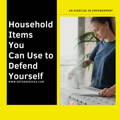
Be sure to check out this article on household items you can use to defend yourself that are found in every room of your home.
5. Keep Landscaping From Becoming Cover
Beautiful landscaping can unintentionally create excellent hiding places.
Large shrubs beneath windows, overgrown hedges, and dense bushes around entry doors provide concealment that burglars appreciate. If someone can work on a window or door without being seen from the street or neighboring homes, they're far less likely to be interrupted.
Regularly trim vegetation around your home's exterior, especially near first-floor windows and entrances. Tree branches should also be kept away from upper-story windows where they could provide easy access.
At the same time, don't remove all landscaping. Instead, design it to improve visibility while maintaining curb appeal. Decorative plants with thorny branches beneath vulnerable windows add an additional deterrent.
6. Let Security Cameras Do More Than Record Crime
Visible security cameras are one of the most effective ways to discourage opportunistic burglars. While cameras can't physically stop someone from attempting a break-in, they significantly increase the risk of being identified, which is often enough to make a criminal choose another target.
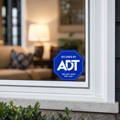
Even the use of home security company decals in your windows and signs in the yard serve a big downer to anyone looking for a potential target. They have no idea that you don’t really have a security system.
With that being said, modern security cameras are more affordable than ever and offer features such as motion detection, night vision, two-way audio, and smartphone alerts. Whether you choose wired or wireless cameras, focus on covering the areas a burglar is most likely to approach.
Good locations include:
• Front door
• Back door
• Garage
• Driveway
• Side gates
• First-floor windows that are hidden from the street
Whenever possible, position cameras high enough to avoid tampering while still capturing clear facial images. Keep trees, decorations, and seasonal items from blocking their view.
Remember that cameras work best as part of a layered security plan. A visible camera, good lighting, reinforced doors, locked windows, and attentive neighbors together create a much stronger deterrent than any single security measure alone.
7. Don't Make Your Garage an Easy Entry Point
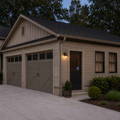
Many homeowners secure the front door while overlooking the garage.
An attached garage often provides direct access to the house, making it an attractive target for burglars. If someone gains entry through the garage, they can work on the interior door with much less risk of being seen.
Start by treating your garage with the same level of security as your front entrance.
Make sure you:
• Keep the overhead garage door closed whenever possible.
• Lock the door connecting the garage to your home.
• Never leave your garage door opener visible inside a parked vehicle.
• Secure windows in the garage with locks and privacy coverings to conceal expensive equipment and tools stored inside.
If your garage door opener includes a vacation mode or lock feature, activate it whenever you'll be away for several days.
A garage filled with tools can also become a burglar's toolkit. Ladders, pry bars, cordless tools, and bolt cutters should be secured whenever possible rather than left in plain sight.

8. Be Careful What You Share on Social Media
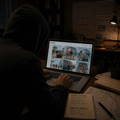
Years ago, burglars had to physically watch a neighborhood to learn when homeowners were away. Today, many people announce it themselves.
Vacation photos, airport check-ins, cruise updates, and countdown posts can unintentionally tell strangers that a home will be vacant for several days. Even if your privacy settings are restricted, posts can still be shared beyond your intended audience.
A safer habit is to enjoy your trip first and post your photos after you've returned home.
The same principle applies to expensive purchases. Photos showing new electronics, jewelry, collectibles, or other valuables can unintentionally advertise what's inside your home.
Protecting your family's privacy online is now an important part of protecting your home offline.

9. Cell Phone and Key Fob Should Be Bedside at Night
Always sleep with your car key fob on your nightstand. If you hear someone break in, you can hit the panic alarm button on your car’s alarm system to try and startle the burglar and call attention to the situation from nearby neighbors.
Of course, your phone should always be bedside in case you need to call 911 in the middle of the night.
10. Store Valuables Where Burglars Don't Expect Them

Professional burglars tend to search the same places first.
Master bedroom dresser drawers, closet shelves, under the mattress, and bedside tables are among the most common hiding places for jewelry, cash, and important documents.
A high-quality home safe remains one of the best long-term solutions. For smaller valuables that and items that require frequent access, well-designed diversion safes can provide another layer of protection by blending into ordinary household items.
The goal isn't to rely on a single hiding place. Instead, use multiple layers of security that force a burglar to spend more time searching than they're willing to risk.
11. Hide Your Spare Key with Some Thought
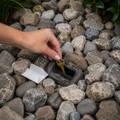
Hiding a spare key under the doormat or in the flower pot is super convenient and easy to find if you get locked out, but these are among the first places burglars check.
Experienced criminals know the common hiding spots:
• Under welcome mats
• Beneath flowerpots
• Above door frames
• In mailboxes
• Under patio furniture
Using a fake stone diversion safe is a better option because it will blend right in with other rocks in your landscaping.
Another option is installing a quality keypad or smart lock that allows authorized users to enter with a temporary access code instead of a physical key.
Convenience should never come at the expense of security.
12. Create a Family Home Security Plan

Even the best security equipment is only part of the equation. Everyone in your household should know what to do if someone attempts to break in.
Discuss situations such as:
• Someone knocking aggressively at the door.
• A stranger claiming to be a utility worker.
• An alarm sounding in the middle of the night.
• Suspicious activity outside.
• Returning home and discovering signs of forced entry.
If you arrive home and believe someone may already be inside, do not enter the house. Move to a safe location and call 911 immediately.
Practicing your response before an emergency occurs helps everyone react more confidently if the unexpected happens.

13. Keep Personal Protection Within Reach

Your home's physical security is your first line of defense, but personal defense is equally important if you and your family are home when a break-in occurs.
Many homeowners choose to keep legal self-defense tools readily accessible in locations where they spend the most time, such as the bedroom or living room. Depending on your local laws, this may include pepper gel, a stun gun, or other legal self-defense products.
The key is choosing products you understand and practicing how to use them safely before an emergency ever occurs. A home defense trigger pistol pepper gel makes an excellent non-lethal, indoor safe home defense choice for homeowners seeking a firearm style feel in a non-permanent solution.
Preparation builds confidence, and confidence helps you respond more effectively during stressful situations.
Common Home Security Mistakes That Burglars Love
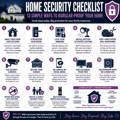
Sometimes it's not one major mistake that makes a home vulnerable—it's several small habits that add up over time.
Ask yourself:
• Do you leave doors unlocked during quick errands?
• Is your garage door left open while you're working outside?
• Are packages sitting on your porch for hours?
• Can expensive electronics be seen through your windows?
• Have you tested your outdoor lights recently?
• Are shrubs blocking the view of your front door?
• Do you post vacation photos before returning home?
• Is your house number clearly visible for emergency responders?
Most of these issues can be corrected in just a few minutes, yet they can dramatically improve your home's security.

Frequently Asked Questions
- What is the easiest way to burglar-proof a home?
Start with the basics: lock all doors and windows, install motion-activated lighting, reinforce exterior doors with longer screws and quality deadbolts, and keep your property well maintained.
- Do burglars avoid homes with security systems?
Visible security decals, signs and cameras often discourage opportunistic burglars because a security system complicates an intrusion. These methods are most effective when combined with other security measures.
- Where do burglars usually look first?
Many burglars search the primary bedroom first because jewelry, cash, and valuables are often stored there. Common hiding places include dresser drawers, closets, under mattresses, and bedside tables.
- Does leaving lights on really keep burglars away?

Programmable or smart lighting that creates the appearance of normal household activity is generally more effective than leaving one light on continuously.
The Takeaway
Most residential burglaries are crimes of opportunity. Burglars generally look for homes that appear easy to enter, easy to search, and easy to leave without being noticed.
The average time a thief spends in a home is less than 8 minutes. That's why the goal isn't perfection—it's creating enough obstacles that a criminal decides your home simply isn't worth the risk.
Strong locks, reinforced doors, motion-activated lighting, trimmed landscaping, visible security cameras, secure storage for valuables, and smart daily habits all work together to create a safer home.
Every improvement you make increases the time, effort, and uncertainty a burglar faces. In many cases, that's enough to convince them to move on to an easier target.
Protecting your home doesn't require expensive renovations. It starts with making thoughtful decisions every day and taking simple steps before they're ever needed. Because the best home security system isn't built around one product—it's built around preparation.
Defense Divas® wants to keep you and your personal property safe. Follow us on all your preferred social media channels to get a daily dose of self-defense tips and safety awareness right in your feed.
Copyright© 2026 All rights reserved. This article or any portion thereof may not be reproduced or used in any manner whatsoever without the express written permission of Defense Divas®.