


“Creating a questionable uncomfortableness puts you off balance."
The Boundary Tests: How Predators Discover What You'll Tolerate
Beyond the attack predator with the goal of committing their crime and never being identified lies another type- the long game predator. All predators are looking for someone who appears sheepish, distracted, or physically vulnerable. However, after that assessment, the next step is to test their possible target.
Before they decide whether a person is worth targeting, they want information. They want to know how that person responds to pressure, whether they trust their instincts, and how likely they are to enforce personal boundaries when those boundaries are challenged.
The important thing to understand is that predators rarely gather this information through obvious aggression on the first contact. If someone immediately acted threatening, most people would recognize the danger and respond accordingly. Instead, many predators start with small interactions that seem insignificant on their own.
A question that feels slightly too personal. A request that continues after a polite refusal. A stranger who stands a little too close. A person who treats a clearly stated boundary as the beginning of a negotiation rather than the end of a conversation.

What makes these interactions effective is that they create uncertainty. Most people are comfortable responding to obvious danger. They are far less comfortable responding to behavior that feels wrong but could potentially be explained away. As a result, they often spend more time questioning themselves than questioning the behavior.
Think about how many times you've heard someone say, "I thought it was strange, but I didn't want to overreact."
That sentence appears again and again in stories involving manipulation, harassment, stalking, and even violent crime. The person noticed the behavior. They felt uncomfortable. Their instincts were trying to tell them something. The problem wasn't a lack of awareness. The problem was that they talked themselves out of trusting what they were noticing.

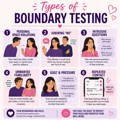
Types of Boundary Testing
Boundary testing is the process of intentionally or unintentionally pushing against another person's limits to determine what behaviors, expectations, or demands will be accepted. It occurs in personal relationships, friendships, workplaces, families, and even casual social interactions.
While some boundary testing is a normal part of human interaction as people learn how to relate to one another, repeated or manipulative testing can become harmful when it disregards another person's comfort, safety, or autonomy. Understanding the different types of boundary testing can help individuals recognize problematic behaviors and respond appropriately.
1. Physical Boundary Testing
Physical boundary testing involves actions that challenge a person's comfort with touch, personal space, possessions, or bodily autonomy. This can range from seemingly minor behaviors, such as standing too close during a conversation, to more serious violations like unwanted touching or repeated disregard for requests regarding physical contact.
A common example occurs when someone continues to hug, touch, or make physical contact after being told that such behavior is unwelcome. Physical boundary testing can also involve borrowing belongings without permission, entering private spaces uninvited, or ignoring safety-related limits. In healthy relationships, physical boundaries are respected without requiring repeated reminders. When someone consistently pushes these limits, it may indicate a lack of respect for personal autonomy or an attempt to establish control.

2. Emotional Boundary Testing
Emotional boundary testing occurs when someone challenges another person's emotional limits, privacy, or right to manage their own feelings. This type of testing often appears through intrusive questioning, emotional manipulation, guilt-tripping, or attempts to make someone responsible for another person's emotional state.
For example, a person may repeatedly demand explanations for private feelings, pressure someone to share personal information before they are ready, or react negatively when emotional support is not immediately available. Emotional boundary testers may dismiss feelings, minimize concerns, or use statements designed to provoke guilt in order to get what they want.
Over time, these behaviors can leave individuals feeling emotionally exhausted, responsible for others' happiness, or unable to express their own needs without fear of conflict.
3. Time Boundary Testing
Time is one of the most valuable resources people possess, which makes time-related boundary testing particularly common. This type of testing occurs when someone disregards another person's schedule, commitments, or availability.
Examples include repeatedly calling or texting during work hours after being asked not to, expecting immediate responses to non-urgent messages, arriving excessively late without consideration, or demanding attention despite prior commitments. Some individuals may assume that their needs should take priority over everyone else's schedule.
Healthy relationships recognize that each person has competing responsibilities and deserves control over how they spend their time.
4. Intellectual Boundary Testing
Intellectual boundaries protect a person's right to hold opinions, beliefs, and ideas without being subjected to ridicule, coercion, or constant challenge. Intellectual boundary testing occurs when someone repeatedly dismisses, mocks, or pressures another person regarding their thoughts and viewpoints.
This may involve interrupting conversations, refusing to respect differing opinions, constantly playing devil's advocate solely to provoke disagreement, or attempting to force someone to adopt a particular perspective. While healthy debate and discussion can be productive, intellectual boundary testing often shifts the focus from exchanging ideas to asserting dominance or undermining confidence. Over time, it can discourage open communication and create an environment where individuals feel unsafe expressing themselves.
“Understanding the types of boundary tests prepares you to quickly identify them and act accordingly.”
5. Sexual Boundary Testing
Sexual boundary testing involves behaviors that challenge a person's limits regarding intimacy, attraction, consent, or sexual discussions. This type of testing can begin subtly, such as making inappropriate comments, asking intrusive questions about sexual experiences, or repeatedly steering conversations toward sexual topics despite signs of discomfort.
More concerning forms involve pressuring someone to engage in activities they have declined, attempting to negotiate after consent has been withheld, or treating boundaries as obstacles to overcome rather than limits to respect.
Healthy relationships recognize that consent must be freely given and can be withdrawn at any time. Repeated sexual boundary testing often serves as a warning sign that a person may not fully respect another individual's autonomy.

6. Financial Boundary Testing
Financial boundary testing occurs when someone challenges another person's limits regarding money, resources, or financial responsibilities. This may involve asking for loans repeatedly, pressuring someone to make purchases they cannot afford, expecting financial support without agreement, or attempting to gain access to financial information that should remain private.
In some cases, financial boundary testing begins with small requests designed to assess how willing a person is to provide assistance. If these requests are consistently granted, the demands may gradually increase. Healthy financial boundaries help maintain fairness, reduce resentment, and protect individuals from exploitation or financial strain.
7. Digital Boundary Testing
Modern technology has created an entirely new category of boundary challenges. Digital boundary testing occurs when someone disregards limits related to online communication, privacy, or access to personal information.
Examples include repeatedly messaging after being asked to stop, expecting constant availability, demanding passwords, monitoring online activity, or using location-sharing tools without clear consent. Some individuals may become upset if messages are not answered immediately or may attempt to track another person's activities through social media.
Respecting digital boundaries has become increasingly important as technology allows unprecedented access to people's lives.

8. Social Boundary Testing
Social boundary testing involves challenging a person's preferences regarding relationships, social activities, or interpersonal interactions. This can include pressuring someone to attend events, introducing them to people they have chosen to avoid, or attempting to dictate who they should spend time with.
A common example occurs when someone repeatedly insists that a person participate in activities after they have declined. Another example is pressuring individuals to reveal personal information in group settings despite their discomfort.
Social boundary testing often reflects a belief that another person's preferences are less important than group expectations or personal desires.
9. Professional Boundary Testing
Workplace environments frequently involve boundary testing because roles, responsibilities, and expectations can sometimes be unclear. Professional boundary testing may involve assigning work outside agreed responsibilities, contacting employees during personal time, expecting unpaid labor, or pressuring colleagues to share personal information.
While flexibility can be necessary in many workplaces, repeated violations of professional boundaries can contribute to burnout, stress, and decreased job satisfaction. Learning how to handle harassment is critical in the workplace. Clear communication regarding responsibilities, availability, and expectations helps create healthier professional relationships and prevents misunderstandings.

The Test Is Rarely About the Request
One of the biggest misconceptions about boundary testing is that people focus on the thing being requested instead of the information being gathered.
Imagine a woman leaving a grocery store when a man approaches and asks for her phone number. She politely declines. For most people, the interaction should end there. Instead, he asks why. She tells him she's not interested. He asks whether she has a boyfriend. She says that's not relevant. He insists that he's a nice guy. She repeats that she's not interested. He laughs and tells her she's being difficult.
Most people view this as a conversation about a phone number. It isn't. The phone number stopped being the point several exchanges earlier.
Sexual predator profiling shows us that what the man is actually learning is whether her boundaries remain firm once pressure is applied. Will she continue saying no? Will she begin explaining herself? Will she apologize for her decision? Will she become uncomfortable enough to give a fake number simply to end the interaction? Will she prioritize avoiding awkwardness over enforcing a boundary?
The answers to those questions provide valuable information. In fact, they often provide more valuable information than the phone number itself.
This is why boundary testing is so important to understand. The request is frequently just a vehicle for the test. A manipulative person is often less interested in what they are asking for than they are in how you respond when they ask. They are learning whether the boundary exists only when it is convenient or whether it remains in place when challenged.

Why Predators Use Small Violations
Many people assume that if someone had bad intentions, they would reveal those intentions immediately. In reality, most manipulators and predators understand that obvious misconduct creates obvious resistance.
Small violations are much safer for them to go unnoticed. When someone stands too close, asks an inappropriate question, or ignores a minor boundary, the behavior is often subtle enough to create doubt. The person on the receiving end is left trying to determine whether the action was intentional, accidental, or simply socially awkward.
That uncertainty becomes an advantage. While the target is busy analyzing the behavior, the person conducting the test is often analyzing the response.
• Did the person create distance?
• Did they confidently speak up?
• Did they look uncomfortable?
• Did they ignore their own discomfort to avoid appearing rude?
Predators and manipulators frequently rely on the fact that most people want to be fair. Most people do not want to assume the worst about others. Unfortunately, that desire to be fair can sometimes cause people to ignore information that deserves attention.
A healthy person who accidentally crosses a boundary will usually adjust once they realize it. A manipulative person often does the opposite. They push again. Not because they necessarily care about the original request, but because they are interested in learning where the limits are.

What Your Response to Boundary Testing Communicates
Whether we realize it or not, every interaction communicates information. Interviews with convicted muggers reveal that a person who calmly enforces a boundary sends a very different message than someone who apologizes for having one.
This does not mean people should become rude, confrontational, or suspicious of everyone they meet. It simply means understanding that how we respond matters. A manipulative person may hear that explanation and view it as an opportunity. They may continue looking for a way around the boundary rather than respecting it.
This is why confident people often appear more difficult to manipulate. They tend to understand that boundaries do not require lengthy explanations. A boundary is not a debate. It is information. The healthiest people recognize that information and adjust accordingly.

When Small Boundary Tests Become Bigger Problems
One of the reasons boundary testing deserves attention is because it rarely happens only once.
Most serious manipulation follows a pattern of gradual escalation. A person discovers what is tolerated and then pushes a little further. If that behavior is tolerated, they push again. The progression is often so gradual that it becomes difficult to identify in real time.
• The coworker who begins with personal questions eventually starts commenting on appearance.
• The acquaintance who ignores a simple refusal begins showing up uninvited.
• The person who repeatedly invades personal space begins making physical contact.
When viewed individually, each action may seem minor. When viewed together, a pattern emerges. That pattern is often far more important than any single incident.
One awkward interaction does not necessarily reveal much about a person's intentions. Repeated behavior, however, tells a story. People reveal their attitudes toward boundaries through consistency.
Someone who repeatedly challenges limits after they have been clearly communicated is showing you exactly how they view those limits. The mistake many people make is waiting for a major incident before taking their discomfort seriously. By that point, they have often ignored a long series of smaller warning signs.
The Takeaway
Boundary testing can take many forms, from physical and emotional challenges to financial, digital, and professional pressures. While not every boundary violation is intentional, how someone responds after a boundary is communicated often reveals their level of respect and offers insight into the mind of your potential attacker.
Understanding boundary testing helps you recognize when someone is pushing your limits and gives you the confidence to respond appropriately. Healthy relationships are built on mutual respect, not on how much one person can tolerate from another.
Setting clear boundaries is not rude, selfish, or unkind. It is one of the most important ways to protect your well-being, strengthen your self-respect, and create healthier relationships. The people who value and respect you will respect your boundaries, too.
Defense Divas® wants you to be equipped to defend yourself not only with a self-defense weapon, but also with the practical knowledge of safety awareness and prevention.
Follow us on your favorite social media platforms (@DefenseDivas) to receive safety tips, product videos and more in your daily feed. Leave us a comment and introduce yourself too!
Copyright©2026 All rights reserved. This article or any portion thereof may not be reproduced or used in any manner whatsoever without the express written permission of Defense Divas®.