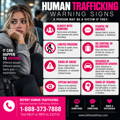


Learn how to spot human trafficking, recognize sex and labor trafficking warning signs, understand common myths, and know when and how to report concerns.

JUN 14, 2019 | uPDATED sEP 06, 2026

how to spot human and sex trafficking in your community

“This insidious epidemic happens in restaurants, factories, farms, nail salon, and hotels in all of our communities and neighborhoods.”


How to Spot Human Trafficking: Warning Signs You Should Know

Human trafficking does not always look like a kidnapping, a locked room, or a stranger being physically dragged away. It can happen behind the doors of seemingly ordinary homes and businesses, and the person being exploited may continue going to work, attending school, using a phone, or interacting with the public.


That is one reason learning how to spot human trafficking matters.


Human trafficking involves exploiting another person for labor, services, or commercial sex through forms of compulsion or coercion. Under federal law, force, fraud, or coercion generally distinguishes trafficking from other situations involving adults. When a person under 18 is induced to engage in a commercial sex act, however, proof of force, fraud, or coercion is not required.


There is also no single profile of a trafficking victim. Trafficking can affect people of different ages, genders, backgrounds, income levels, and communities. Certain circumstances can increase vulnerability, including unstable housing, previous abuse, economic hardship, involvement in the child welfare or juvenile justice systems, substance dependency, and social isolation.


Recognizing trafficking therefore requires something more useful than memorizing a stereotype: learning to notice patterns.

🔴 Human Trafficking Is Not Only Sex Trafficking

Public discussions about trafficking frequently focus on sexual exploitation, but human trafficking also includes forced labor and services.


Labor trafficking can occur in agriculture, domestic work, restaurants, construction, factories, hospitality, salons, and other legitimate industries. A workplace itself is not suspicious simply because it employs vulnerable or immigrant workers. The concern is whether someone is being compelled to work through threats, coercion, fraud, abuse, debt, confiscation of documents, or other means of control.


Sex trafficking involves commercial sexual activity under circumstances defined by federal trafficking law. Traffickers may be strangers, but they can also be romantic partners, relatives, acquaintances, employers, or other people the victim already knows.


Understanding that distinction helps us look beyond the dramatic scenarios commonly portrayed in movies and social media.

look-for-these-signs-to-spot-trafficking

🔴 Look for Patterns, Not a Single “Trafficking Sign”

One unusual behavior does not mean someone is being trafficked. A nervous person may simply be nervous. Someone without identification may have lost it. A person may work long hours by choice or necessity. Tattoos are common and usually have absolutely nothing to do with trafficking.


Concern increases when multiple warning signs appear together or when another person seems to exercise unusual control over someone's movement, communication, money, work, identification, or decisions.


The Department of Homeland Security's Blue Campaign similarly cautions that no single indicator proves human trafficking is occurring.

🔴 Someone Else Controls Their Conversations or Decisions

One of the more meaningful warning patterns is an apparent lack of personal autonomy.


A person accompanying someone else may insist on answering every question, refuse to allow private conversation, monitor what the person says, or appear to coach their answers. The potentially exploited person may repeatedly look toward that individual before answering even simple questions.


They may seem frightened of saying the wrong thing or provide answers that sound rehearsed.


Language barriers should never automatically be interpreted as evidence of trafficking. However, concern may be warranted when a companion unnecessarily prevents someone from communicating independently or insists on controlling the interaction.

trafficking-signs-controlled-conversation

🔴 Identification, Money, Personal Possessions Are Controlled

Traffickers can create dependency by controlling the practical things a person would need to leave.


A worker may not have possession of their passport, driver's license, immigration documents, earnings, phone, or other important belongings. They may have little control over their own money or transportation.


In labor trafficking situations, a worker might also describe an ever-growing debt to an employer or recruiter, unexpected recruitment fees, withheld wages, threats connected to immigration status, or employment conditions dramatically different from those originally promised.


Again, not possessing an ID by itself does not establish trafficking. The larger question is whether another person is deliberately controlling someone's documents, finances, movement, or ability to leave.
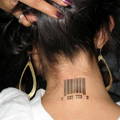
bar code branding human trafficking victim

🔴 Tattoos and Branding Require Context

One of the obvious signs of human trafficking is tattoo branding. People often get tattoos to show who or what they love. However, in the human trafficking rings, a tattoo is being used to brand men, women, or children regarded as their human "property."

These tattoos indicate that the victim belongs to a particular trafficker. Common trafficking tattoos include dollar signs, the “owner’s” initials or brand logo, barcodes, and even the price it costs to prostitute the woman or child.

Common places to see these tattoos are in the private region, on the neck, arm, or lower back.

Healthcare professionals can be in a particularly important position to recognize these warning signs because a medical appointment may be one of the few opportunities a trafficking victim has to interact with someone outside the trafficker's control. Physicians, nurses, emergency medical personnel, dentists, mental health professionals, and other healthcare workers should be trained not only to recognize potential indicators of trafficking, but also to respond in a trauma-informed and nonjudgmental way.

Recognizing a suspicious tattoo may open the door to helping someone, but how that person is approached can be just as important as recognizing the warning sign in the first place.

Confronting a suspected victim, demanding answers, or immediately asking, “Are you being trafficked?” can frighten someone who fears retaliation against herself or her family. Whenever safely possible, healthcare professionals should create an opportunity to speak with the patient privately, ask respectful and nonthreatening questions, and follow established trafficking-response protocols.
branding crown trafficking tattoo victim

🔴 Excessive Work and Exploitative Living Conditions

Trafficking victims may work excessively long or unusual hours and may live at or near the location where they work. Some are transported between their housing and workplace under tightly controlled circumstances.

Poor or unsafe living conditions can also be part of a broader pattern. A person may be housed in overcrowded or unsuitable accommodations, lack basic necessities, or have little freedom to come and go.

People whose jobs routinely take them inside homes and workplaces, including healthcare workers, maintenance personnel, contractors, utility employees, teachers, hospitality employees, and service professionals, may encounter circumstances the general public never sees.

The goal is not to investigate those situations yourself. It is to recognize when several concerning circumstances deserve professional attention.
signs-labor-trafficking-agriculture
What’s more, victims of human trafficking are usually made to work for excessively long hours. They are required to work and serve their master under horrific conditions, sexual abuse and/or hard labor. 

The victims of modern slavery and are often lured into servitude via one of three paths. If they are illegal immigrants, they may be required to repay their smuggler for safe passage into America in the form of indentured servitude. What shocks most people is that many victims of sex trafficking in the U.S. are every day, average American girls and boys themselves.

Some even go to school and live at home, while being trafficked on the weekends! They are lured in by the promises of a sexual predator (often online) to meet an unfilled need for acceptance and love that is missing inside of them.

Lastly, some sex trafficking victims are just flat out kidnapped. Victims of both forms of human trafficking may be found doing factory work, performing farm labor, domestic servitude, in restaurants, salons and even family-owned businesses.

All are forced to remain in bondage due to the power/control their handler extorts over their lives. This can be done in several common ways such as keeping them indebted for the food or shelter provided all the way to indebtedness for an addiction habit that has been nurtured by the human trafficker to create a dependency.
human-trafficking-warning-signs

🔴 Physical Injuries, Exhaustion, and Unmet Basic Needs

Some trafficking victims experience physical or sexual violence, dangerous working conditions, sleep deprivation, inadequate food, or denial of medical treatment.

Possible warning signs can include unexplained or recurring injuries, signs of restraint or abuse, untreated medical problems, extreme exhaustion, inadequate clothing for working conditions, or apparent deprivation of food, water, sleep, or healthcare.

Healthcare professionals are particularly well positioned to recognize patterns of abuse or control because they may have opportunities to speak privately with patients and observe injuries that are hidden beneath clothing and not visible during ordinary interactions.

🔴 Fearful, Anxious, Submissive, or Scripted Behavior

A person experiencing trafficking may appear fearful, tense, anxious, unusually submissive, withdrawn, or hyperaware of the person accompanying them.

Their behavior may change dramatically when an employer, partner, or other controlling individual enters the room.

They may appear coached about what to say or give answers that seem inconsistent with behavior that's connected to fear, monitoring, threats, or control.

Human trafficking victims are frequently trained to adhere strictly to a scripted or rehearsed response during social interactions. They may have inconsistencies in their story. In fact, they may not even know what city or state they are in. They are controlled completely and they only do or know what they are told.

CAN YOU SPOT TRAFFICKING?

Please watch this short video and see if you can spot the trafficking victims. How many did you see? Were you shocked at the signs that were right in front of your eyes and you didn’t even notice? Me too!
🔴 Crowded and Poor Living Conditions

Service workers such as repairmen, garbage collection and utility company employees should be particularly aware of the living conditions at the homes that they service.

If there is an oddly large “family” living in a home, or 8 young females living in poor conditions- these would be things that aren’t the norm.

Remember, the trafficker only has interest in providing them with the bare minimum necessary to keep them healthy enough to not draw unwanted attention, attractive enough to turn a profit for sex, and alive enough to use them up.

The victims of trafficking often have no possessions and may even be living and working on site.
human trafficking is modern slavery

🔴 High Security Measures In Place

Human trafficking cartels or individuals involved in trafficking take security of their “investment” very seriously. The biggest security measure they take is through the emotional and mental control of the victim.

Power and control are the human trafficker’s M.O. A fearful, addicted, dependent or extorted victim is not a flight risk.

On the physical level, you may also see unusually high security at a home that is holding victims. For example, if you see deadbolts on interior doors that lock people INSIDE rooms or opaque house windows- these may be signs that victims of trafficking are being held at that location.

🔴 Removal of Identity

To control trafficking victims and prevent them from escaping, the owner of the victims confiscates the victim’s identification documents (driver’s license, passport, ID card). 

Most human trafficking victims have no valid ID card, no money, no financial records, no bank account, and are often bought and sold between traffickers like a product! Every move is controlled.
Some signs you may watch out for would be:
💣Inability to provide a valid form of ID
💣Inability to make decisions without asking someone else first (i.e. their handler)
💣Turning down invitations to socialize for no valid reason.
💣Needing another’s permission to speak up or answer questions.
💣May seem hesitant or afraid that they might say the wrong thing and receive disapproval from the handler.
💣Not being able to speak on their own. There is a third-party present insisting on translating for the victim.

Human trafficking victims are often powerless. The buying, selling and moving of modern slavery victims is so sly that it is hiding in plain sight.

“If you believe you have come in contact with a victim, contact police and Dept of Homeland Security immediately.”
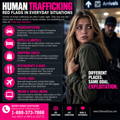

Defense-Divas-human-trafficking-red-flags

🔴 Online Recruitment Can Begin With Trust, Romance, or Opportunity

Trafficking does not always begin with physical force.

Traffickers may exploit an existing vulnerability and gradually establish control. Recruitment can involve promises of romance, belonging, financial security, employment, housing, gifts, or a better life.

Warning signs can include a rapidly developing and unusually controlling relationship, expensive gifts from a new person whose role is unclear, an online relationship becoming intensely dependent very quickly, or a job opportunity that sounds unusually lucrative while the recruiter refuses to provide basic details.

Young people who have run away, lack stable housing, have experienced previous abuse, or desperately need money or emotional support can be particularly vulnerable to exploitation.

Parents and young adults should understand this distinction because sensational social-media stories can create the impression that trafficking primarily occurs when strangers snatch unsuspecting victims from public places. Trafficking can instead develop through grooming, manipulation, dependency, fraud, and coercion.
signs-trafficking-online-recruitment

🔴 What Should You Do If You Suspect Human Trafficking?

Your role is to notice and report, not to conduct your own investigation.

Do not confront a suspected trafficker, attempt a physical rescue, follow someone's vehicle, trespass onto property, or place yourself or the potential victim in greater danger. A confrontation could cause the person controlling the victim to retaliate, relocate them, or increase surveillance.

Instead, observe details you can safely and lawfully remember or document. Location, descriptions, vehicle information, names being used, dates, and what you personally observed may be useful when making a report.

If someone appears to be in immediate danger, call 911.

For suspected trafficking in the United States, the National Human Trafficking Hotline can be reached 24 hours a day at 1-888-373-7888. You can also text 233733 (BEFREE) or use the Hotline's online resources.

If you have the opportunity to speak privately with someone you are concerned about, avoid accusations or interrogation. A calm question such as whether they feel safe or are free to leave their situation may be more useful than announcing that you believe they are a trafficking victim.

Most importantly, respect the complexity of the situation. Fear, financial dependence, threats against family members, emotional attachment, immigration concerns, homelessness, or other circumstances may make leaving far more complicated than it appears from the outside.
human-trafficking-notice-and-report

🔴 Awareness Makes Communities Harder to Exploit

Human trafficking thrives when exploitation goes unnoticed. The key to exposing and ending the trafficking epidemic is recognizing combinations of legitimate warning signs, and knowing where to report reasonable concerns.

A restaurant employee who notices another worker never receives their wages. A teacher who sees a student's new relationship becoming increasingly controlling. A healthcare professional whose patient is never permitted to speak privately. A contractor who notices workers apparently living under highly restrictive conditions.

Learn the signs. Pay attention to the people around you. Report credible concerns through the appropriate channels.

Sometimes being aware enough to notice is exactly where helping begins.
Sale Off
defense-divas-safety-sheila-self-defense-kit
$77.85$67.85
We are the front line to battling this evil and bringing them to accountability. It is our duty to help identify and assist these victims. 

If you believe you may know a victim of human trafficking or may have useful information about a potential human trafficking ring, do not hesitate to contact the local police, the Department of Homeland Security and/or the FBI.

Unite your community and join Defense Divas in bringing the perpetrators of such insidious act to justice. Defend yourself today from being a victim of sex trafficking, domestic violence, rape and burglar attacks with our self-defense products. 

Copyright©2026 All rights reserved. This article or any portion thereof may not be reproduced or used in any manner whatsoever without the express written permission of the author.


Fast Shipping!

All orders ship within 24 hours that are placed Sunday-Friday. Orders placed on Saturday ship on Monday.

Secure Checkout!

Feel confident in your purchase and your personal data. PCI Compliant.

Female Owned Small Business

Women empower women. Shop female. Shop small. Thank you for your support!
FOLLOW US!