
10 vital travel abroad safety tips to help you avoid scams, protect valuables, secure your hotel room and stay safer while traveling internationally.

JUN 19, 2019 | update sep 11, 2026

10 International Travel Super Safety Tips

10 Vital International Travel Safety Tips

Passport? Check. Plane tickets, hotel reservations and itinerary? Check. But what about your personal safety plan?


International travel is one of the best ways to experience new cultures, meet new people and see places you've only read about. It also puts you in unfamiliar surroundings where you may not know the language, local laws, safest neighborhoods, common scams or even how to contact emergency services. That doesn't mean you should be afraid to travel. It means you should prepare.


These travel abroad safety tips go beyond the usual advice about watching your luggage and keeping your passport close. A little planning before you leave can make you much harder to victimize and much better prepared to handle an emergency thousands of miles from home.

“Leave copies of your Important Travel Docs with family before you leave the country in case of emergency.”


1. Copy Your Identifying Documents

Before leaving the country, make copies of your important travel documents. The U.S. Department of State specifically recommends making multiple copies because they can help you replace originals that are lost or stolen.

Leave one set with a trusted person at home and keep another set separate from the originals while traveling. You can also maintain secure digital copies that you can access if your phone, purse or luggage disappears.

Important documents and information may include your:
✔️Passport
✔️Birth Certificate
✔️Driver’s License
✔️Health Insurance ID card
✔️Travel Insurance information

✔️Emergency Contacts

✔️Travel itinerary

✔️Prescriptions and important medical information

You generally don't need to travel internationally with your original birth certificate unless your particular circumstances require it. The goal is to have enough identifying and travel information available to make replacing lost documents and getting assistance easier.


Before departure, U.S. travelers should also consider enrolling their trip in the State Department's Smart Traveler Enrollment Program (STEP). The free service provides alerts from U.S. embassies and consulates and can help officials contact you or your emergency contact during an emergency.
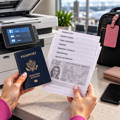
travel-safety-tips-copy-your-identifying-documents

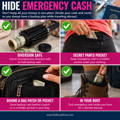
2. Hide Emergency Cash

Don't keep every dollar, credit card and payment method in the same wallet. If that wallet disappears, so does your entire financial backup plan.

Divide your resources. Carry the money you expect to use that day while keeping emergency funds and a backup payment method somewhere separate and secure. If you're traveling with someone you trust, dividing resources between the two of you can provide another layer of protection.

A hotel safe may be useful, although no storage location should automatically be assumed to be completely secure. A discreet diversion safe or inconspicuous hiding place can provide another option where appropriate.

If you're the victim of a robbery, you won’t be left stranded. Some creative ways to do this are:

✔️Inside a stash can or diversion safe. These are made to look like regular everyday products that you would normally have in your possession, but they have a secret inside compartment to hold (and hide) your valuables and cash.
✔️Inside a secret pocket sewn into your pants.
✔️Behind a patch or pocket on your traveling bag or backpack.
✔️Rolled carefully into an empty tube or Chapstick container.
hide-emergency-cash-travel-safety-tips

3. Learn to Recognize Common Travel Scams

Tourists make attractive targets because they're often distracted, unfamiliar with local customs and carrying money, phones, passports and credit cards.

Common schemes include someone spilling something on your clothing and then "helping" clean it, unsolicited bracelets or gifts followed by demands for payment, fake police officers asking to inspect your wallet, strangers offering ATM assistance, rigged or questionable taxi charges and distractions designed to separate you from your belongings.

The details change from country to country. That's exactly why researching scams specific to your destination before departure is so useful.

Be especially cautious when a stranger creates urgency, confusion or physical distraction. Ask yourself what else is happening around you. Is another person moving closer? Is someone directing your attention away from your bag? Are you being pressured to hand over your wallet, passport or phone?

Situational awareness remains one of your strongest self-defense tools because recognizing a setup early gives you the opportunity to walk away before it becomes a crime.

No matter how “modern”, “safe” or “Americanized” you may think the city you are visiting overseas may be, there are always opportunistic people that make a career out of targeting tourist and non-local visitors. Even if you think you are too smart to be scammed, you may be surprised to learn how smooth and skilled professional con-artists can outsmart you.
female-tourist-mexican-market-situational-awareness

4. Carry Bulletproof Protection

In our current world climate, an active shooter or terroristic situation can occur anytime and anywhere. Unfortunately, preparing for is no longer an option; it’s a necessity.  Carrying bulletproof protection on your body can mean the difference between life and death in an active shooter situation such as a plane jacking or terrorist attack in a foreign city.

Having a bulletproof insert shield in your purse, carry-on or under your shirt provides you peace of mind that you are not a sitting duck in a SHTF situation.

Before traveling with any protective equipment, research the laws and customs regulations of your destination and every country through which you will transit. Never assume an item is legal internationally simply because you can legally own or travel with it inside the United States.

Most importantly, don't allow protective equipment to create a false sense of security. Avoidance, awareness and a willingness to leave are still your first lines of defense.
learn-emergency-word-translations-travel-safety-tips

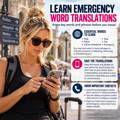
5. Learn Emergency Word Translations

If you're traveling somewhere you don't speak the language, learn several emergency words and phrases before you arrive.

"Help," "Police," "Call an ambulance," "Stop," "Fire," and "Emergency" are good places to start. Depending on your circumstances, you may also want to learn phrases that clearly communicate that someone is attacking, following or threatening you.

Save the translations on your phone, but don't make your phone your only resource. A dead battery, lost phone or poor cellular connection shouldn't leave you completely unable to communicate.

Also learn the local emergency telephone number. Don't assume 911 works everywhere. Save the address and telephone number of the nearest U.S. embassy or consulate along with the contact information for your hotel, travel companions and emergency contact back home.

“Learn how to yell Help, Rape and Emergency! in the native language of the country you are visiting.”
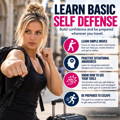

learn-basic-self-defense-travel-safety-tips

6. Learn Basic Self-Defense

International travel is an excellent reminder that your most dependable self-defense skills are the ones that aren't packed in your suitcase.

Simply put, travelling in unfamiliar countries, visiting popular tourist sites, possibly getting lost trying to get somewhere- you need to have a few basic self-defense techniques in your personal safety repertoire.

Self-defense weapons that are legal where you live may be prohibited at your destination. Pepper spray, stun guns and other defensive devices are illegal or tightly controlled in a number of countries. Local law applies to you even when you didn't know you were violating it, and restrictions can also apply while merely transiting through a country.

Research every item before packing it. When in doubt, check official information for the destination or contact its embassy or consulate.

More importantly, develop defensive skills that travel everywhere with you. Practice maintaining personal distance, using strong verbal commands, recognizing pre-attack behavior, identifying exits and moving toward populated areas when something feels wrong.

Some basic avoidance self-defense tactics are very effective without ever reaching hand-to-hand combat. If a robber demands replaceable property while displaying a weapon, protecting your life is more important than protecting your purse or phone. Physical resistance is not automatically the safest response. Your objective is to recognize the safest opportunity to disengage and escape.

Good self-defense is not about winning a fight. It's about getting out of it and back to safety.
pack-a-first-aid-kit-travel-safety-tips

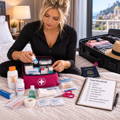
7. Pack a First Aid Kit

A small travel health kit can save you from searching for unfamiliar medications or medical supplies while dealing with a minor injury or illness. No matter how careful you can be, you can sustain injuries when you travel abroad and the language barrier can be a huge problem when minutes may matter to your medical emergency. 

Packing a small first aid kit (in your suitcase- not your carry-on luggage) allows you to take care of many minor injuries such as cuts, bruises and even bad sunburns without requiring medical assistance in a foreign land.

Your kit should be appropriate for your destination, activities and personal medical needs. Basic supplies might include adhesive bandages, gauze, medical tape, antiseptic supplies, pain relievers, antihistamines, sunscreen and any personal medications you regularly require.

Prescription medication deserves special attention when traveling internationally. Keep necessary medicines in their original labeled containers and check the rules for your destination before leaving. Some medications that are commonly prescribed or sold over the counter in the United States are restricted or prohibited elsewhere.

Keep essential prescription medications accessible rather than placing your entire supply in checked luggage. Bring enough for the trip and consider reasonable extra medication for unexpected travel delays when permitted.

A first-aid kit isn't a substitute for professional medical treatment. Its purpose is to help you manage ordinary minor problems and remain prepared until appropriate medical care is available.
hotel-door-stop-alarm-travel-safety-tips

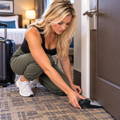
8. Inspect Your Hotel Room

Don't drop your luggage and immediately start unpacking.

When you first enter a hotel room, confirm that it is actually vacant and inspect the space before settling in. Check the bathroom, closets, under beds and other areas where someone could reasonably be present. Make sure connecting doors, balcony doors and accessible windows lock properly.

Test the main door lock and deadbolt. Locate the nearest emergency exit and look at the evacuation route instead of assuming you'll figure it out during an emergency.

Once inside for the night, use every appropriate locking mechanism provided. A portable travel door alarm or door stop alarm may provide an additional layer of warning where its use is permitted and compatible with the door.

If something about the room, lock, hallway or location makes you uncomfortable, contact hotel management and request another room. You don't need to talk yourself out of a legitimate safety concern just because changing rooms is inconvenient.
travel-safety-tips-leave-bread-crumbs

9. Leave Bread Crumbs

“Bread crumbs” are small pieces of information you deliberately leave behind so someone can retrace your movements if you fail to return or something goes wrong. When traveling, a few well-placed bread crumbs can give family members or authorities valuable information about where you were headed and when you were expected back.

The most important bread crumbs should be left with someone you trust. Before heading out for sightseeing, dinner, a hike or another excursion, send a quick message with your destination, how you plan to get there and approximately when you expect to return. If your plans change significantly, send an update. When appropriate, you can also temporarily share your phone’s location with a trusted friend or family member.

You can leave a backup clue in your hotel room as well. A simple note stored somewhere private, such as inside the hotel safe with your important documents, can include where you planned to go, the date and time you left and when you expected to return. If authorities ever needed to investigate your disappearance, that information could help establish your last known plans.

Be more cautious about using hotel employees as your primary bread crumb. Telling the front desk, “I’m traveling alone, I’m heading to this location and I won’t be back until midnight” gives a stranger more information than necessary. It also announces that your room will probably be vacant for a predictable period of time.

Instead, be visible without oversharing. Walking through the lobby, briefly speaking with an employee, asking a simple question or making eye contact as you leave can make you more memorable without revealing your entire itinerary. Hotel security cameras may also provide investigators with useful information about when you entered or left the property.

The goal is not to make sure strangers know your movements. It is to create a deliberate trail of information that could be followed if you unexpectedly stop communicating or fail to return.
Think of it this way: someone you trust should know where you planned to go, when you left and when you should be back. Those are the bread crumbs that matter most.
monitor-alcohol-intake-travel-safety-tips

10. Watch Your Alcohol Intake

All-inclusive resorts make it very easy to lose track of your alcohol intake. You also begin forming friendships and bonds with other visitors at your hotel because you're all sharing this travel adventure together and everyone is in that vacay vibe.

Vacation can make people lower their guard. Resorts, cruises, nightlife districts and group excursions create an atmosphere where strangers can begin feeling like friends remarkably quickly.

Alcohol can reduce awareness, judgment and reaction time precisely when you're navigating an unfamiliar environment. Keep track of your own drinks, don't leave beverages unattended, and never accept an open drink from someone you don't know well.

Be equally careful about what you reveal. A friendly conversation doesn't require sharing your room number, travel schedule, or the fact that you're traveling alone.

Enjoy yourself, but remember that someone you met yesterday is still someone you met yesterday. It can be as simple as someone outright stealing from you. It could be more horrific such as having your drink drugged and being sexually assaulted. Or it could me more advanced and complex such as your personal identity information being stolen and used online a few weeks or months later.

If a person becomes unusually persistent, ignores your boundaries, pressures you to drink more, tries to isolate you from your companions or insists on accompanying you somewhere you don't want to go, treat that behavior as a red flag. Keep your guard up and maintain your personal boundaries at all times.
female tourist safety tips
Traveling abroad doesn't require becoming suspicious of everyone around you. It requires recognizing that you're operating outside your normal environment and preparing accordingly.

Research your destination, know its laws, protect your documents, maintain situational awareness and make sure someone you trust knows where you're supposed to be.

Implementing these simple safety precautions into your travel plans is a great way to be proactive about your personal safety and ensure that you enjoy every bit of your vacation. We believe knowledge is power. Prepare well, keep your head up, trust your instincts and go explore safely.

Copyright©2026 All rights reserved. This article or any portion thereof may not be reproduced or used in any manner whatsoever without the express written permission of the author.

Fast Shipping!

All orders ship within 24 hours that are placed Sunday-Friday. Orders placed on Saturday ship on Monday.

Secure Checkout!

Feel confident in your purchase and your personal data. PCI Compliant.

Female Owned Small Business

Women empower women. Shop female. Shop small. Thank you for your support!
FOLLOW US!